

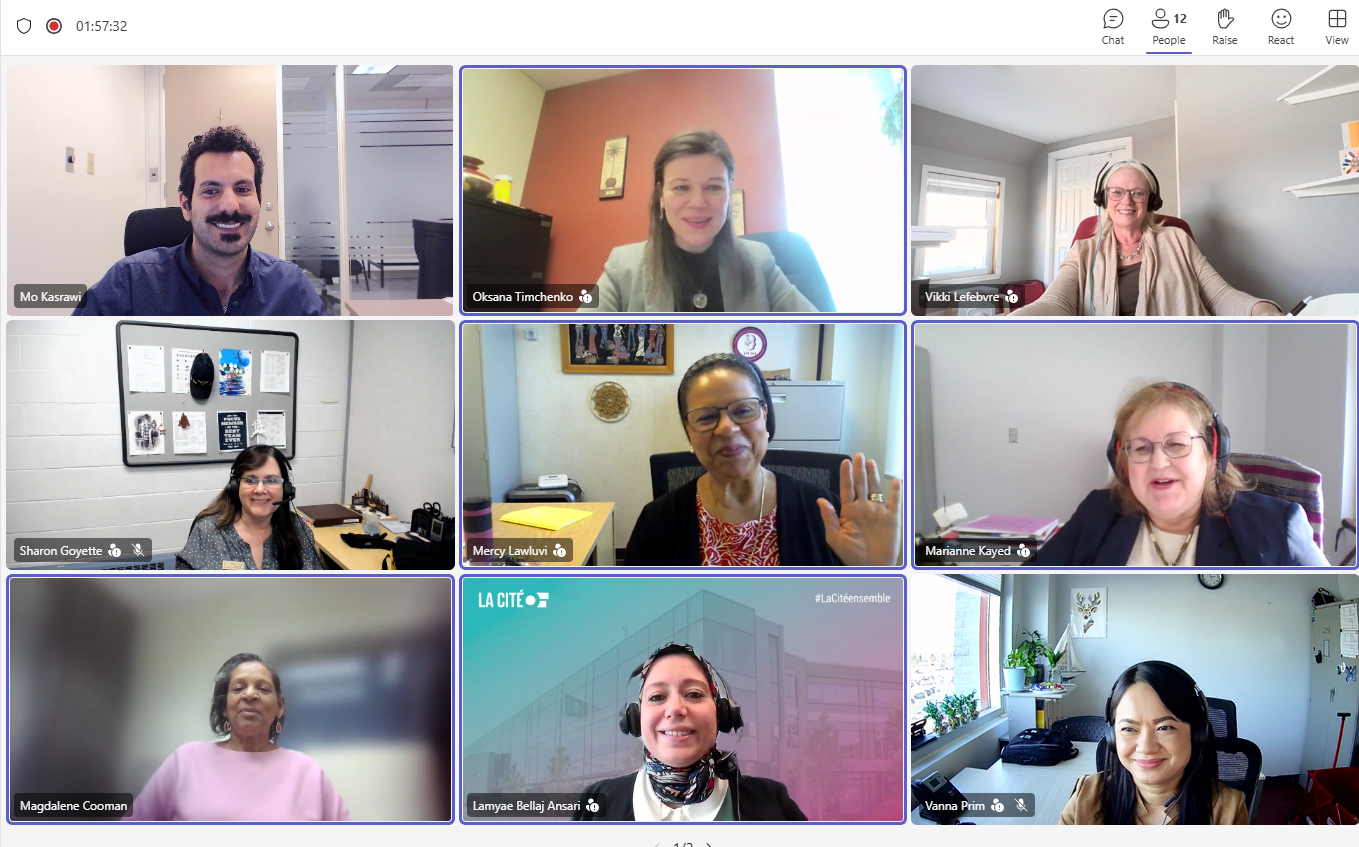
On February 19, OLIP partners gathered for the relaunch of the Language Learning and Translation Sector Table under renewed leadership at the Ottawa Local Immigration Partnership (OLIP). After a long hiatus, the meeting focused on reconnecting, reaffirming the Table’s shared mandate, and recalibrating priorities in response to significant sector changes — particularly recent IRCC funding cuts.
As the first Sector Table meeting under the new OLIP leadership, it marked an important moment to rebuild relationships, reflect on past milestones, and set a clear and realistic direction for 2026. Chaired by co-chairs Mercy Lawluvi and Marianne Kayed, the meeting also provided an opportunity to express gratitude for their long-standing contributions to the sector.
The meeting began with a comprehensive overview of OLIP’s governance structure and a refresher on the Ottawa Immigration Strategy (OIS), along with the key priorities guiding the Language Learning and Translation Sector Table. This grounding in structure and strategy helped situate the day’s discussions within the broader immigration and settlement landscape before partners moved into updates from their respective organizations.
As organizations shared their current realities, a common theme quickly emerged: the widespread impact of IRCC funding cuts. Partners reported reductions in employment preparation ESL classes, growing waitlists for both employment-focused and general English programming, staffing transitions and job losses, and ongoing uncertainty about service levels. These operational pressures are not isolated; they reflect a broader shift affecting the entire language learning and interpretation ecosystem.
Beyond program reductions, funding cuts have also had ripple effects across the sector, including job losses for teachers and challenges for TESL training programs. Participants emphasized the need for coordinated messaging to clients affected by program changes and highlighted the importance of collective advocacy and collaboration to navigate this evolving environment.
OLIP Support and Sector Coordination
In response to these challenges, OLIP outlined several ways it will support partners moving forward. This includes increasing the visibility of partner initiatives through blogs and newsletters, strengthening collective advocacy messaging, and reinforcing Ottawa’s identity as a welcoming and inclusive community.
To further reduce silos and enhance collaboration, OLIP committed to improving information-sharing mechanisms across Sector Tables. Proposed approaches include joint meetings where appropriate and more consistent cross-sector updates. In addition, partners discussed developing a centralized resource bank and shared event calendar on the OLIP website, creating easier opportunities to circulate conferences, tools, and best practices.
Operationally, the group agreed to hold three Sector Table meetings per year, with flexibility to convene ad hoc meetings as needed. This structure aims to balance consistent planning with the agility required to respond to emerging sector developments. Meeting schedules will also be coordinated with the Community Partnership Committee (CPC) to avoid duplication and maximize participation, particularly on matters related to language assessment and referral.
Looking Ahead to 2026
Overall, the February 19 meeting represented a significant step in reconnecting the Language Learning and Translation Sector. Despite funding pressures and service reductions, partners demonstrated resilience, openness, and a strong commitment to collaboration. Moving toward 2026, the Sector Table will focus on strengthening coordination across language and interpretation services, implementing an updated and realistic Action Plan, advocating for sustainable and equitable funding, and ensuring targeted support for populations most affected by service gaps.
Partners and organizations who would like to participate are encouraged to connect with Mo Kasrawi, OLIP Partner Relations Officer, to learn more about the Table’s work and how to get involved.