

By Magdalene Cooman, Executive Director, Ottawa Local Immigration Partnership.
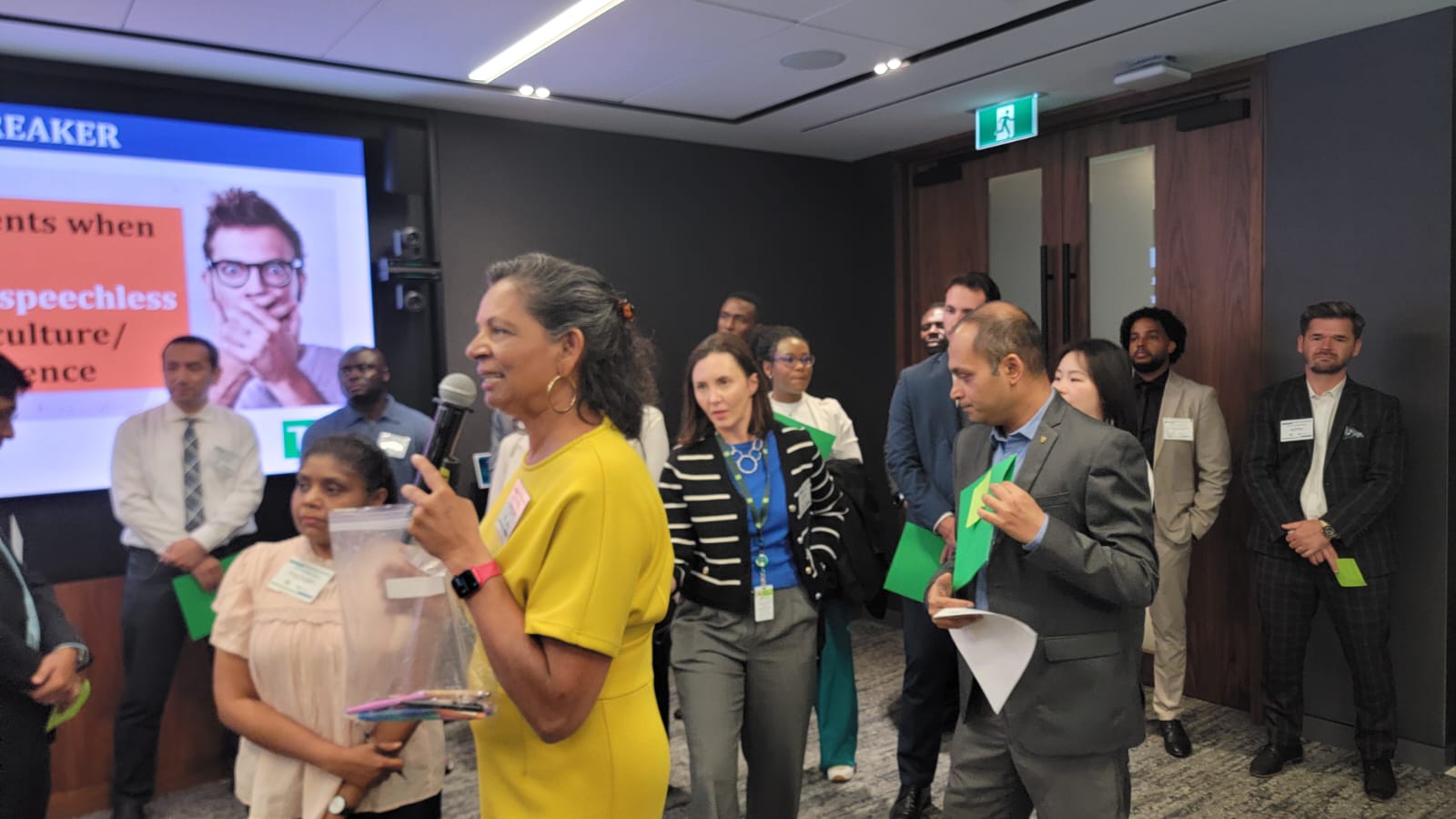
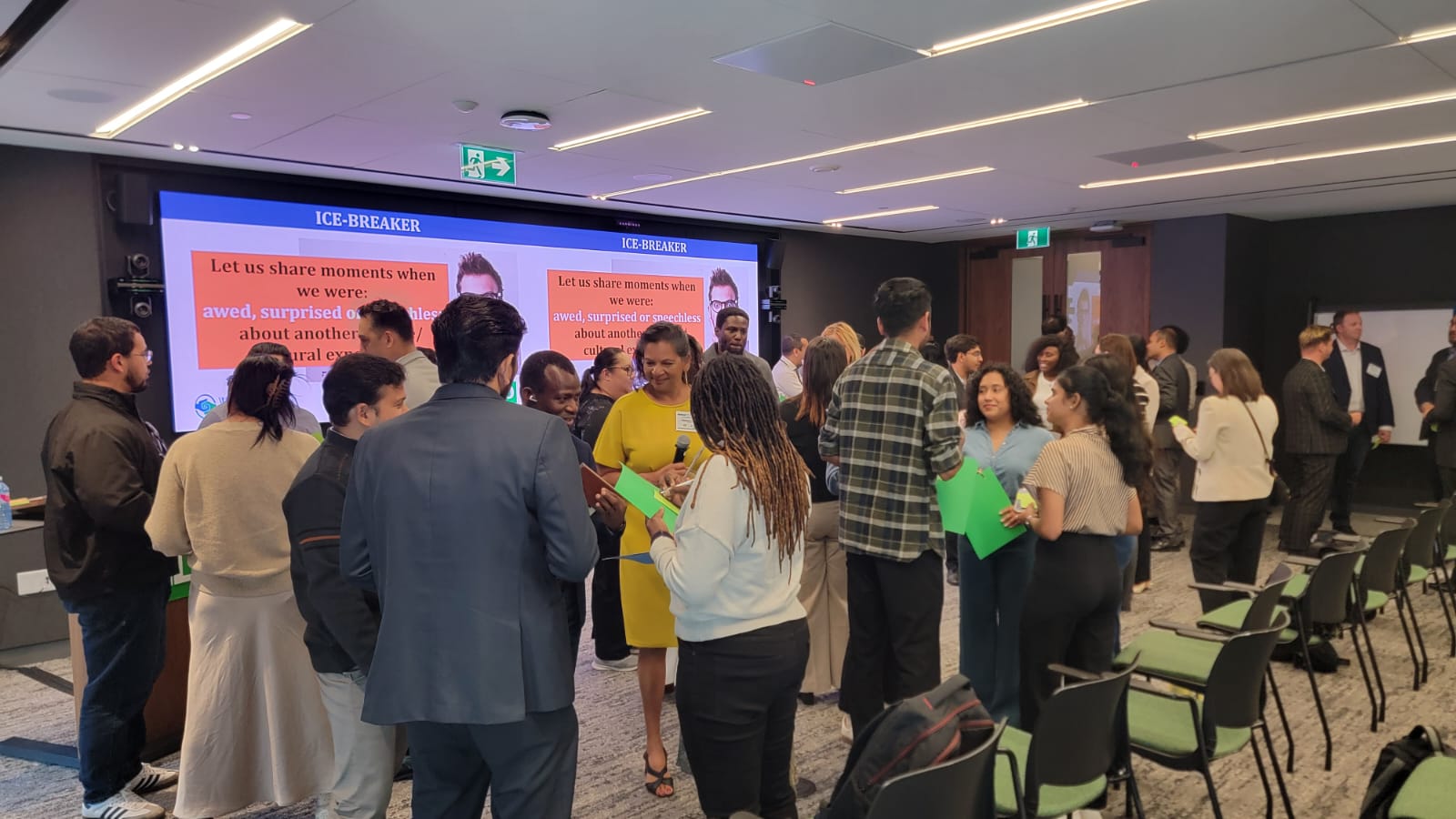
On September 23, 2026, I facilitated a cross-cultural communication workshop in Toronto to mark the expansion of the TD-World Skills Mentorship Program, which began in Ottawa more than a decade ago. Listening to newcomers and TD mentors share their experiences that day reminded me why this work matters for every community that hopes to be truly welcoming.
A welcoming community is built one conversation at a time, and cross-cultural communication training helps both newcomers and employers get those conversations right.
Picture a new engineer at an Ottawa firm. In her first team meeting, she stays quiet while colleagues debate a design choice. Where she trained, openly challenging a senior colleague would be disrespectful. Her manager reads the silence as a lack of ideas. Nobody did anything wrong, but a talented professional has just been misjudged, and the team has lost her perspective.
Moments like this happen every day in workplaces across our city. They are rarely about language ability alone. They are about unspoken norms: how directly we give feedback, how we sell our own accomplishments in an interview, what small talk signals, how we handle disagreement. When those norms go unexamined, good intentions on both sides can still end in frustration.
What Is Cultural Fluency?
Cultural fluency is the ability to understand, communicate and work effectively with people from different cultural backgrounds. It means recognizing and respecting differences, adapting how we communicate, and responding thoughtfully to perspectives unlike our own, using skills like empathy, active listening and curiosity.
Talent That Isn’t Reaching Its Potential
Newcomers are finding work faster than ever, but too many are working well below their skills. Statistics Canada reported in April 2026 that close to 1 in 3 (32.6%) of core-aged recent immigrants with postsecondary credentials said they were overqualified for their jobs. That compares with 1 in 5 (19.1%) people born in Canada. The same Statistics Canada data found that more than 3 in 10 recent immigrants had difficulty finding their first job.
The gap doesn’t close simply with time on the job. A separate Statistics Canada study found that, even at the same level of work experience, recent immigrants were more likely than Canadian-born workers to report having more skills that exceeded the requirements of their jobs.
The cost is shared. For newcomers, underemployment can bring financial pressure and the frustration of seeing years of education and professional experience go unused. Employers also pay a price when the skills of workers they have hired remain underused, potentially affecting engagement and productivity, as researchers writing in The Conversation have noted.
Credential recognition and hiring practices drive much of this gap. But communication across cultures, in the interview room and on the job, is a piece every one of us can act on.
For Newcomers: Decoding The Unwritten Rules
Cross-cultural communication training doesn’t ask newcomers to leave their identity at the door. It gives them a map of Canadian workplace norms so they can navigate them by choice rather than by trial and error. Good training helps newcomers:
- Understand how Canadian employers read interviews, résumés and self-promotion, which often feels uncomfortable to people raised to be modest about their achievements.
- Recognize indirect feedback, such as “you might want to consider…”, which is often a clear instruction in disguise.
- Navigate hierarchy, meetings and disagreement with confidence.
- Build relationships through small talk, networking and informal workplace culture.
- Name and share their own cultural strengths as assets, not gaps to hide.
The result is not assimilation. It is agency: the ability to be understood on one’s own terms.
For Employers: Communication Is a Two-Way Street
Too often, integration is framed as the newcomer’s job alone. But communication is a two-way street, and employers and teams carry half the responsibility for making it work. Cross-cultural training helps managers, HR staff and co-workers:
- Spot cultural bias in hiring, such as undervaluing international experience or mistaking modesty for low confidence.
- Run interviews and meetings that let every candidate and team member show what they can do.
- Give clear, direct feedback that doesn’t rely on shared cultural shorthand.
- Build inclusive onboarding, mentoring and team practices that help people stay and grow.
The business case is strong. Teams that communicate well across differences make better use of the skills they hire, retain staff longer and serve an increasingly diverse customer base. In a tight labour market, being a place where newcomers can thrive is a competitive advantage.

From Our Community: How Two Newcomers Started a Mentorship Movement
Some of the best examples of cross-cultural bridge-building start with newcomers themselves. In 2012, Mayank Sharma approached World Skills Employment Centre with a simple question: how could he help? Mayank had arrived in Canada in 2003, and World Skills had helped him with his résumé and interview preparation. He landed a job at TD and wanted to give back.
At the time, I was a program manager at World Skills Employment Centre. I suggested a mentorship program that would match newcomers with TD executives. It took a year of work to launch. Since then, thanks to TD’s sponsorship, hundreds of newcomers have been matched with TD mentors and found jobs, and TD has gained a pipeline of talent. After more than a decade in Ottawa, the program expanded to Toronto this September.
The lesson is worth sitting with. It took two newcomers to spark this initiative, and two organizations with the vision and drive to sustain it for over a decade. Under the leadership of Gemma Follini, Manager of Employer Engagement and Corporate Mentorship and herself a newcomer, the program has continued to expand. It has also inspired similar mentorship programs with Accenture and RBC, creating even more networks and learning for newcomers and employers alike.
I continue to facilitate cross-cultural communication workshops for the program. In Toronto, as in Ottawa, the most powerful moments come when newcomers and mentors learn side by side: sharing times when another culture surprised or moved them and working through real workplace case studies together.
A few ideas consistently land with both groups:
- Same behaviour, different meaning. Silence, eye contact and direct feedback can be read in completely different ways across cultures. Much like an iceberg, most of what shapes our behaviour (values, beliefs, assumptions) sits below the surface.
- Bias shows up across the whole employee journey. Unconscious bias can affect résumé screening, interviews, onboarding, performance reviews and retention, often without anyone intending it.
- Fluency, not competence. Nobody “masters” another culture. Cultural fluency is an ongoing skill built through humility, active listening, checking assumptions and paraphrasing to confirm understanding.
When mentors hear directly from newcomers about what felt confusing in their first Canadian jobs, and newcomers hear mentors reflect on their own assumptions, both sides leave better equipped. That shared understanding is where belonging begins.
Why This Is Welcoming Community Work
A welcoming community is more than a place where newcomers can find a job. Research behind the Pathways to Prosperity (P2P) framework for measuring welcoming communities points to meaningful employment, positive relationships between newcomers and long-time residents, and inclusive institutions as core features. Cross-cultural communication touches all three.
When a newcomer and an employer understand each other, the benefits ripple outward: a hire that uses someone’s full skills, a team that learns from a new perspective, a family that puts down roots in Ottawa or any other community rather than moving on. Each of those moments strengthens the social fabric of our city.
This is why OLIP brings together settlement agencies, employers, educators and community partners. Through initiatives like Welcoming Ottawa Week, building the Partnership Council, Equity Ottawa and our work with partners across sectors, we’re building a city where welcome is something everyone practises, not just something newcomers receive.
Programs like the TD-WorldSkills mentorship show what’s possible when employers and newcomers invest in understanding each other, and they offer a model other Ottawa employers can build on.
What You Can Do
- Employers: invest in intercultural training for hiring managers and teams, not just for new hires. Review your interview and onboarding practices through a cross-cultural lens.
- Newcomers: look for workplace culture and communication workshops offered through local settlement and employment agencies.
- Service providers and partners: build cross-cultural communication into employer engagement and employment programs and share what works with the OLIP network.
Welcome is not a single gesture. It is a practice we build together, and it starts with learning to understand one another.